Why Asians Are Perceived as Racist — And Why It's More Complicated Than That
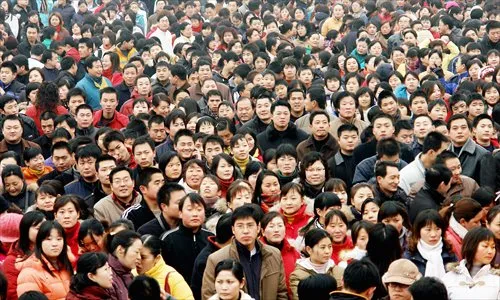
When visitors travel to homogeneous Asian nations, they often notice social dynamics that seem exclusionary or discriminatory. It is common to hear stories of landlords refusing to rent to foreigners, or people staring in public. To Western observers, these actions are quickly classified under the framework of racism. However, understanding these behaviors requires examining a very different historical and cultural context.
First, many East Asian nations historically practiced strict policies of national isolation—such as the Sakoku period in Japan or China's imperial restrictions. For centuries, these societies developed in relative isolation, creating a strong sense of ethnic and cultural uniformity. Unlike Western multicultural societies, identity in these regions became deeply tied to a singular ancestry, language, and social code.
Second, the lack of exposure to diversity plays a major role. In countries where 98% or more of the population shares the same ethnic background, interactions with foreigners are rare. What is often perceived as malice or systemic racism is frequently a combination of extreme curiosity, social awkwardness, and a fear of not being able to communicate due to language barriers.
Furthermore, social conformity is highly valued in collectivist cultures. Any individual who stands out—whether a foreigner or a native who deviates from the norm—faces social pressure.
While discrimination and xenophobia certainly exist and should be addressed, framing them solely through the lens of Western racial theory oversimplifies the issue. It is not about historical systems of racial supremacy, but rather about a deep-seated insularity and the challenge of adapting traditional homogeneous societies to an increasingly globalized world.